
Condoms for Anal Sex: How to Choose and Use Them Safely
Do you need special condoms for anal sex? Not necessarily. What matters most is choosing a condom that fits correctly, is made from a suitable material, is within its expiry date and is used properly with enough compatible lubricant.
Key point: Anal sex can create significant friction, so lubrication and correct condom use are especially important. A product being marketed as "extra strong" or thicker does not automatically make it the best option for you.
What matters when choosing condoms for anal sex?
Focus on a few practical factors rather than a single label.
Fit
A condom should stay securely in place without feeling painfully tight. If it is too loose, it may be more likely to slip. If it is too tight, it can be uncomfortable and may be put under unnecessary strain.
Use the EXS sizing guide to compare nominal widths and find a fit that feels secure and comfortable.
Material
Latex condoms are widely used, but latex-free alternatives are available for people with an allergy or preference for another material.
Always check the individual product instructions, particularly when choosing lubricant. Oil-based products can weaken latex condoms, while water-based and silicone-based lubricants are generally compatible with latex.
For a clearer comparison, read our guide to latex vs non-latex condoms.
Comfort and shape
Straight-walled and flared condoms can feel different because they distribute space differently. The best choice is the one that fits you reliably and feels comfortable throughout sex.
If you want to compare the two designs in more detail, see our guide to straight-walled vs flared condoms.
Best condoms for anal sex
The best condoms for anal sex are not defined by thickness alone. Look for the right size, a material that suits you, a secure fit and a product you can use comfortably with sufficient lubricant.
Some people prefer a slightly thicker condom because it feels reassuring. Others prefer a thinner option because it maintains sensation and encourages them to use condoms consistently. Both can be suitable when the product is designed for sex and used according to its instructions.
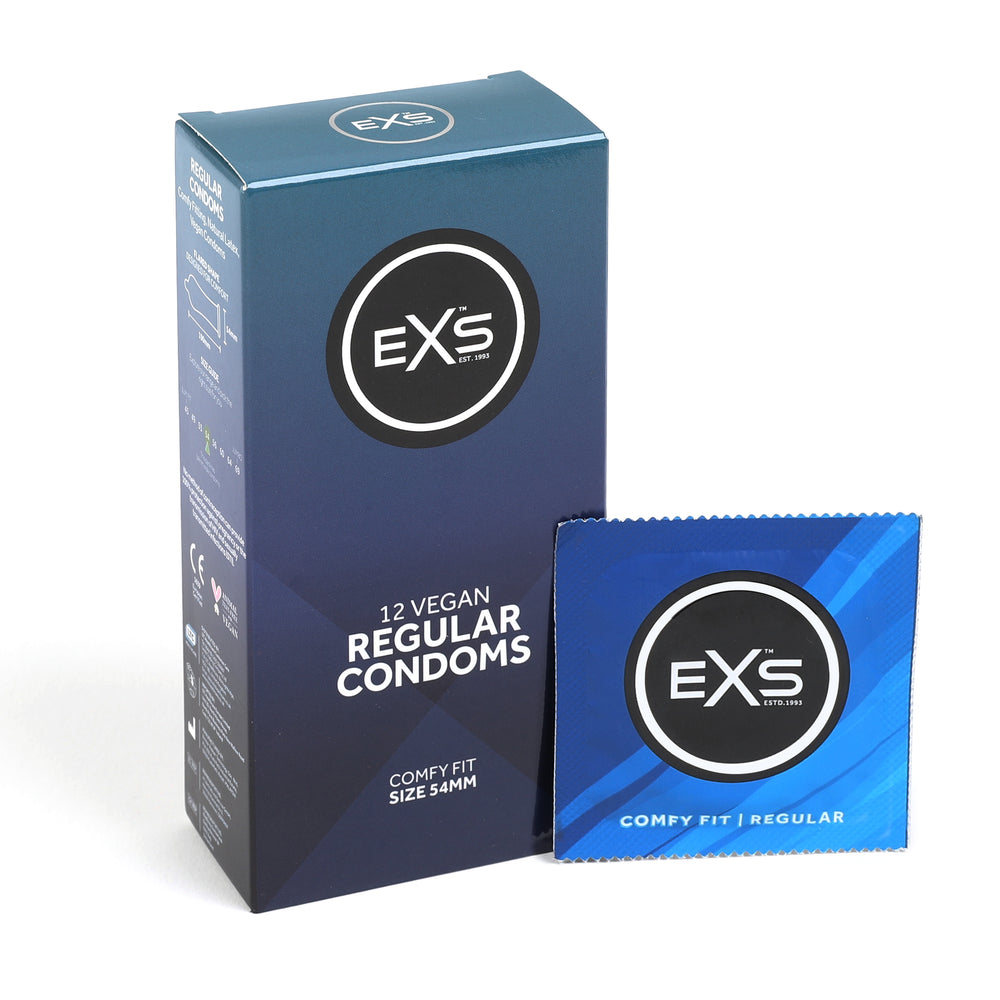
Browse the full EXS condom range and compare sizes rather than choosing on marketing language alone.
Why lubricant matters so much
The rectum does not self-lubricate in the same way as the vagina, so added lubricant is an important part of safer, more comfortable anal sex.
Use a generous amount and add more if sex starts to feel dry or uncomfortable. This can reduce friction on both the condom and delicate tissue.
EXS offers a range of lubricants, including the portable Clear Lube 5ml Sachet and EXS AquaGlider 250ml.
If you are choosing between formulas, our guide to water-based vs silicone-based lube explains how they differ.

How to use a condom for anal sex
Put the condom on before penetration begins. Check the expiry date and wrapper first.
Pinch the reservoir tip and roll the condom all the way to the base of the erect penis.
Add plenty of compatible lubricant to the outside. Reapply as needed.
After ejaculation, hold the base of the condom during withdrawal so it does not slip off.
Remove it carefully, put it in the bin and use a new condom for each sexual act.
Change condoms when switching activities
Use a fresh condom when switching between partners, between different types of penetration or between a toy and a penis where the same condom would otherwise transfer bodily fluids.
For example, do not use the same condom for anal penetration and then vaginal penetration. Remove it, clean as appropriate and use a new condom.
A fresh condom also gives you a chance to check fit and add new lubricant before continuing.
Are thicker condoms safer for anal sex?
Thicker does not automatically mean safer. Condom reliability depends on factors including correct storage, expiry date, fit, application, lubricant compatibility and how the condom is used.
Excess friction, an unsuitable lubricant or a condom that does not fit can create problems regardless of thickness.
Choose a product designed and approved for sexual use, follow the packet instructions and focus on good technique.
What if a condom breaks or slips?
If a condom breaks or comes off, stop sex and replace it before continuing.
There may be a risk of STI exposure. Seek advice from a sexual health service about testing and, where relevant, time-sensitive options such as post-exposure prophylaxis for HIV.
The EXS guide to why condoms break covers common causes and prevention in more detail.
Take comfort seriously
Pain is not something to push through. If penetration becomes uncomfortable, slow down, add more lubricant or stop. Communication and gradual pacing matter just as much as product choice.
Condoms for anal sex should support safer, more comfortable sex, not create pressure to continue when something does not feel right.
Choose fit and technique over labels
The most suitable condoms for anal sex are the ones that fit correctly, are comfortable to use and are paired with enough compatible lubricant. You do not need a product with a particular marketing label to have safer anal sex.
Start with fit, material and comfort, then check the product instructions every time. Use the condom from the beginning of penetration, keep friction low with lubricant and switch to a fresh condom whenever you change partners, toys or types of penetration.
Explore EXS condoms alongside the EXS lubricant range to find a combination that works for you.
Blog posts


Why Are Condoms Flavoured? Uses, Safety and Which Flavour to Try
Why are condoms flavoured? Learn how they are commonly used, what to check before use and how EXS flavours such as strawberry, cola and bubblegum compare.


What Do Ribbed Condoms Do? Ribbed and Dotted Condoms Explained
Ribbed and dotted condoms add texture that can change sensation during sex. Learn how the different designs compare and what else affects comfort.


How to Put On a Condom Correctly: A Step-by-Step Guide
A simple step-by-step guide to putting on a condom correctly, avoiding common mistakes, using the right lubricant and removing it safely afterwards.